Anyone who has spent late nights scrubbing bottle nipples, chasing tiny valve pieces around a sink, or trying to figure out where to fit a drying rack in a cramped kitchen knows that bottle cleaning is one of those unglamorous parenting tasks that quietly eats up time every single day. It’s not dramatic, it’s not exciting, but it’s relentless. Multiply that by three or four feedings a day, add in pump parts if you’re exclusively or partially pumping, and the math starts to feel overwhelming pretty quickly.
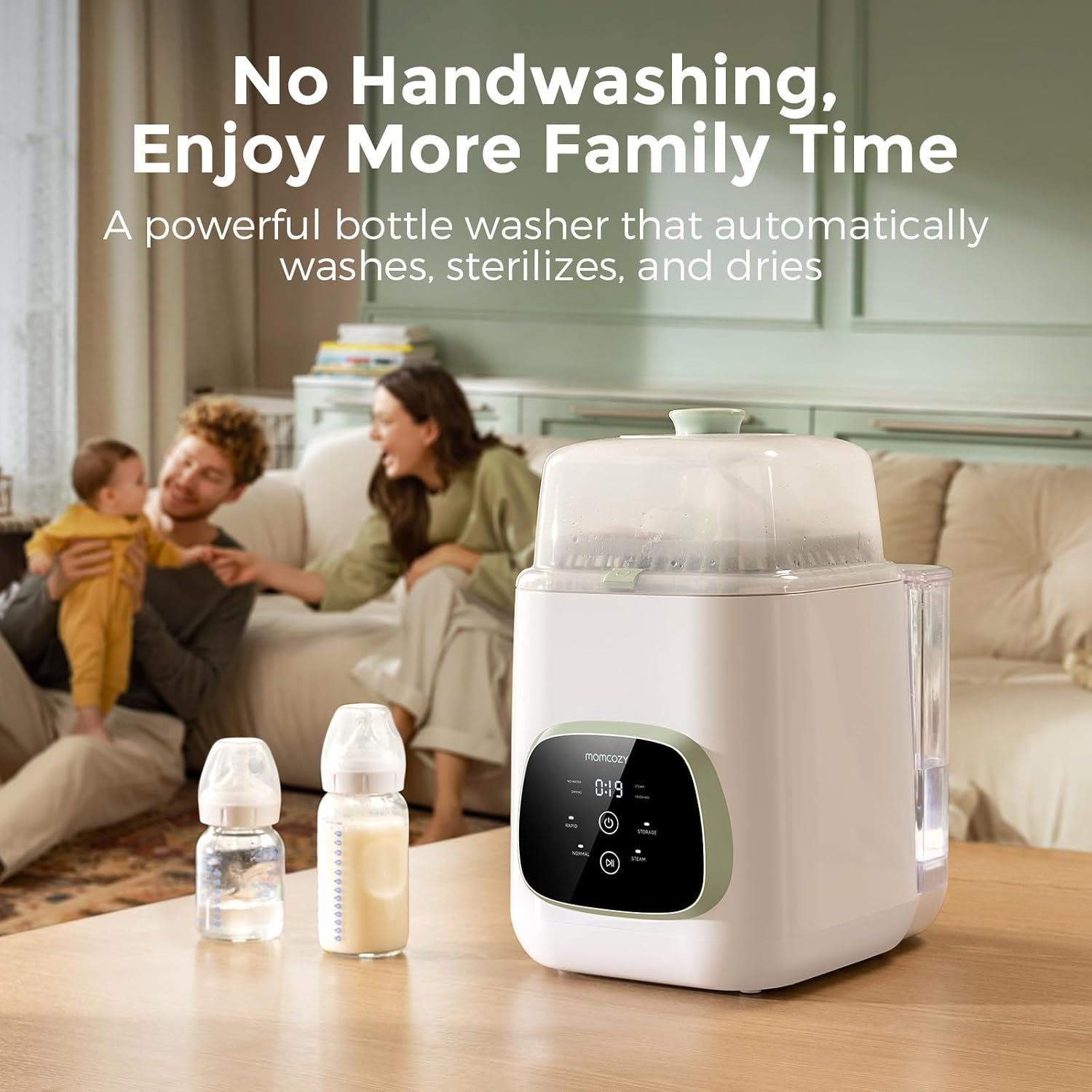
This is the backdrop against which appliances like the Momcozy KleanPal Pro have entered the conversation. Marketed as an all-in-one bottle washer, sterilizer, and dryer, it’s designed to consolidate several separate steps of the feeding-cleanup routine into a single countertop unit. In this article, we’ll walk through what this kind of device typically offers, how it fits into a household’s daily rhythm, who might find it genuinely useful, and what considerations are worth thinking through before deciding whether it belongs on your counter.
What Is the Momcozy KleanPal Pro?
The KleanPal Pro belongs to a growing category of combination appliances aimed at simplifying infant feeding hygiene. Rather than requiring separate devices or manual steps for washing, sterilizing, and drying, it’s built to handle all three functions within one machine. According to the product listing, it comes equipped with 9 cleaning modes and 26 spray jets, along with sterilizing and drying capabilities, and is designed to accommodate not just baby bottles but also breast pump parts and other small baby-related items like pacifiers or small feeding accessories.
The appeal of this kind of device lies in its promise of consolidation. Instead of hand-washing bottles, then boiling or steaming them for sterilization, then air-drying them on a rack (which can take hours and often collects dust or requires counter space), a unit like this attempts to fold all three stages into one automated cycle.
Key Features Worth Understanding
Multiple Cleaning Modes
The inclusion of 9 cleaning modes suggests the device is built with flexibility in mind rather than a one-size-fits-all wash cycle. Different items have different cleaning needs. A glass bottle with dried milk residue might need a more thorough scrubbing cycle, while a pacifier or a small pump part might only need a lighter rinse. Having multiple mode options theoretically allows users to match the cleaning intensity to the item being washed, which can help preserve the lifespan of more delicate components like silicone valves or membranes that are common in breast pump sets.
This kind of mode variety also speaks to a broader trend in baby-care appliances: manufacturers are increasingly recognizing that « bottle washing » isn’t a monolithic task. Parents wash a wide variety of shapes, materials, and part sizes, and a rigid single-cycle machine often fails to accommodate that diversity well.
26 Spray Jets for Coverage
One of the more technical details in the listing is the mention of 26 spray jets. In washing appliances generally, jet count and placement matter more than raw water pressure alone, because bottles and pump parts have irregular shapes — narrow necks, curved bases, small crevices where valves sit, and so on. A higher number of strategically placed jets is intended to reach more surface area during a wash cycle, which can be particularly relevant for pump parts that have small components prone to trapping residue if not properly rinsed.
For context, breast pump flanges and valves are notorious for holding onto milk fat residue in tiny grooves, which is part of why manufacturers recommend thorough cleaning after every use. A device designed with multiple jet angles is attempting to address that specific pain point rather than relying on a generic spray-down approach.
Integrated Sterilization
Sterilization is a separate function from washing, and it’s one that many parents — particularly with newborns or babies with weakened immune systems — are advised to do regularly, especially in the first few months of life. Traditionally, sterilization has been done through boiling, steam sterilizers, UV sterilizers, or sterilizing bags used in a microwave. Having sterilization built into a washing appliance removes a step, since users wouldn’t need to transfer items to a separate steamer or sterilizer unit after washing.
It’s worth noting that pediatric guidance on sterilization frequency varies by age and health circumstances, so this feature may be more heavily used in the newborn stage and less so as a baby grows older and immune-related precautions become less strict. Still, having the option built in gives some flexibility depending on a family’s specific situation.
Built-In Drying Function
Air-drying bottles and pump parts is one of the more space-consuming aspects of the cleanup routine. Drying racks take up counter real estate, can look cluttered, and depending on humidity levels in your home, items may take hours to fully dry, during which they’re exposed to open air and potential contaminants (like errant kitchen splashes or pet hair, if applicable).
A built-in drying function, if it uses appropriate low-heat or filtered air methods suited for plastic and silicone baby items, could shorten this downtime considerably. This is particularly relevant for parents managing a small number of bottles who need items to cycle quickly between uses, rather than having eight or nine bottles all air-drying at once on a counter rack.
Hands-Free, Time-Saving Design
The listing emphasizes a hands-free operation style, which generally means that once items are loaded and a cycle is selected, the appliance handles washing, sterilizing, and drying without requiring the user to physically scrub or monitor each stage. For sleep-deprived parents managing multiple feedings a day, the ability to load the unit and walk away — rather than standing at a sink for fifteen minutes per session — can represent a meaningful shift in how much hands-on time cleanup requires.
Versatility Beyond Bottles
Because the unit is marketed as suitable for « pump parts & baby essentials » beyond just bottles, it appears designed with broader household use in mind. This might include pacifiers, small toys, teethers, or other items that benefit from regular washing and occasional sterilization. This kind of multi-use framing can make the appliance feel more justified as a countertop investment, since its utility isn’t limited strictly to bottle-feeding season.
How It Can Be Used in a Daily Routine
Thinking through a typical day with a device like this can help illustrate where it might fit into an existing routine.
Morning feeding prep: After the first feeding of the day, instead of hand-washing a bottle in the sink while trying to keep an eye on a baby at the same time, a parent could rinse off major residue and load the bottle into the KleanPal Pro, selecting an appropriate cleaning mode.
Pump part turnover: For parents who pump multiple times a day, having a fast wash-and-dry cycle for pump parts means less reliance on having ten sets of duplicate parts on hand just to get through a day. Some pumping parents keep pump parts in the refrigerator between uses to avoid repeated washing, but for those who prefer washing after each session, a quicker turnaround device could reduce the reliance on that refrigeration workaround.
Batch cleaning at day’s end: Rather than washing bottles one at a time throughout the day, some parents may prefer to batch-load several bottles, nipples, and pump parts in the evening, running one larger cycle to have everything ready and sterilized for the next day.
Travel or grandparent visits: If grandparents or other caregivers are watching the baby, having a straightforward, largely automated device may reduce the learning curve compared to teaching someone the « correct » manual bottle-washing and sterilizing process.
Non-bottle uses: Occasionally running a cycle for teethers, small toys, or pacifiers that have been dropped on the floor or chewed on extensively could be another practical use case, especially during the early toddler phase when everything ends up in a child’s mouth at some point.
Who It May Be Suitable For
New Parents Establishing a Routine
For parents in the newborn stage, when sterilization is often recommended more frequently, an all-in-one device could reduce the number of separate appliances and manual steps needed during an already exhausting period.
Parents Who Are Exclusively or Frequently Pumping
Given the emphasis on pump part compatibility, this type of appliance may hold particular appeal for parents managing frequent pumping sessions, where the cumulative time spent washing parts by hand can add up significantly over a day.
Households With Limited Counter or Sink Space
Combining three functions into one unit could be appealing for smaller kitchens where a separate drying rack, sterilizer, and wash basin setup isn’t practical or aesthetically desired.
Parents Managing Multiple Children or Twins
Anyone washing bottles and pump parts for more than one baby at a time may find that consolidating the process into fewer, larger cycles saves more time than it would for a single-baby household, simply due to the increased volume involved.
Caregivers Looking to Reduce Manual Labor
Parents dealing with physical strain, limited mobility, or simply wanting to minimize repetitive tasks during a demanding stage of life may appreciate a more hands-off approach to an otherwise repetitive chore.
Who Might Want to Think Twice
It’s worth being balanced here. Not every household will find this kind of appliance necessary or worthwhile.
Parents who exclusively breastfeed without pumping may have minimal need for a bottle-washing appliance, since their bottle usage might be occasional rather than a daily, high-volume task.
Households with very limited counter space should consider the appliance’s physical footprint before purchasing, since countertop real estate is often at a premium in smaller kitchens, and adding another appliance means something else may need to be displaced.
Budget-conscious families may want to weigh the cost of an all-in-one appliance against simpler alternatives like manual washing paired with an inexpensive drying rack and occasional steam sterilization, particularly if bottle usage is relatively low-volume.
Important Things to Consider Before Purchasing
Cleaning Method Compatibility
Not all bottle materials and pump part components respond the same way to identical washing conditions. It’s worth checking manufacturer guidance on which materials (glass, various plastics, silicone) are compatible with the appliance’s wash cycles, and whether any parts require hand-washing regardless of the appliance’s capabilities.
Maintenance Requirements
Any appliance that handles water, heating, and drying functions will likely require its own periodic maintenance — descaling from hard water buildup, filter cleaning, or interior wipe-downs. Understanding the maintenance routine upfront can help set realistic expectations about the long-term time investment, even if daily washing time is reduced.
Capacity Limitations
It’s useful to think through how many bottles or pump parts the unit can handle per cycle, especially for households with higher usage volumes, such as families with twins or parents pumping multiple times daily. If capacity is limited, multiple daily cycles might still be necessary, which could reduce some of the anticipated time savings.
Noise and Cycle Duration
Combination appliances that wash, sterilize, and dry in sequence may have longer overall cycle times compared to running each function separately with dedicated equipment optimized for speed. It can help to have a sense of typical cycle length so it aligns with how quickly items are needed for the next use.
Space and Placement
Given that this is a countertop appliance combining three functions, its physical dimensions are worth measuring against the intended placement area beforehand, factoring in clearance needed for the door or lid to open, ventilation for the drying function, and proximity to a water source or drainage if applicable.
Sterilization Necessity Over Time
As mentioned earlier, sterilization guidance often becomes less strict as a baby grows older and their immune system develops, unless there are specific health considerations. Families should consider whether the sterilization function will remain a regular part of their routine long-term, or whether it’s primarily useful in the earlier months.
Comparing General Categories of Bottle Cleaning Solutions
To put an all-in-one appliance like this in context, it helps to compare it against other general approaches parents commonly use.
Manual hand-washing with a drying rack remains the most budget-friendly and flexible option, requiring no special appliance beyond basic dish soap, a bottle brush, and a drying rack. The tradeoff is the hands-on time required multiple times per day and the counter space a drying rack occupies while items air-dry, which can take several hours.
Dishwasher-safe cleaning (for bottles and parts labeled as such) can reduce hands-on scrubbing time, though not all pump parts or specialty bottle components are dishwasher-safe, and dishwasher cycles don’t include a dedicated sterilization step unless the dishwasher has a sanitize setting.
Standalone steam sterilizers handle sterilization efficiently but typically require items to already be washed beforehand, meaning they address only one part of the overall cleaning process rather than the full cycle.
UV sterilizer bags or devices offer a sterilization method without heat or steam, which some parents prefer for certain materials, but again, these generally assume pre-washed items and don’t include a washing or drying function.
All-in-one combination appliances, like the category this product belongs to, attempt to consolidate washing, sterilizing, and drying into a single unit and cycle. The tradeoff for this convenience is generally a higher upfront cost and a larger physical footprint compared to simpler individual tools, along with a dependency on one machine handling multiple functions rather than distributing the tasks across dedicated, potentially more specialized equipment.
Each approach has its own balance of convenience, cost, and space requirements, and the right fit really depends on a household’s specific feeding patterns, available space, and budget priorities.
Frequently Asked Questions
Is sterilization necessary for every bottle wash?
Pediatric guidance on this varies, and many sources suggest sterilization is most critical in the first few months of a baby’s life or for babies with specific health vulnerabilities. As babies grow, thorough washing with hot, soapy water is often considered sufficient for general use, though checking with a pediatrician for individual guidance is always a reasonable step.
Can this type of appliance handle all bottle brands and materials?
Compatibility can vary by manufacturer specifications. It’s worth reviewing product details or manufacturer guidance regarding glass versus plastic bottles, as well as compatibility with specific breast pump brands, since pump part shapes and materials differ across manufacturers.
How long does a typical wash-sterilize-dry cycle take?
Cycle times differ depending on the specific mode selected and the appliance’s design. Checking the product specifications or included manual for approximate cycle durations can help set expectations for how this fits into a daily routine.
Does using an appliance like this replace the need to rinse bottles before loading them?
Even with automated washing appliances, it’s often recommended to rinse off major milk residue before loading items, similar to how many people pre-rinse dishes before using a dishwasher. This can help the appliance perform more effectively and may reduce maintenance needs over time.
Is this suitable for small apartments or shared living spaces?
Given that it’s a countertop appliance, available space is the primary consideration. Measuring the intended placement area against the product’s dimensions beforehand can help avoid space-related surprises after purchase.
Will this appliance work for older babies and toddlers, or is it mainly for newborns?
While sterilization needs typically decrease as a baby ages, the washing and drying functions may still hold practical value for cleaning sippy cups, snack containers, pacifiers, and other small items well beyond the newborn stage, depending on a family’s ongoing usage habits.
Final Thoughts
Appliances like the Momcozy KleanPal Pro reflect a broader shift in baby-care products toward consolidation and convenience, aiming to reduce the number of separate steps and tools parents need to juggle during an already demanding stage of life. The combination of multiple cleaning modes, a notable spray jet count, built-in sterilization, and drying functionality speaks to an attempt at addressing the full lifecycle of bottle and pump part hygiene within a single countertop unit.
Whether this kind of device makes sense for a particular household really depends on factors like feeding volume, available kitchen space, budget considerations, and how long sterilization remains a priority in a family’s routine. For some parents — particularly those managing frequent pumping sessions or multiple children — the time and effort saved may feel significant. For others with lower bottle usage or tighter space constraints, simpler manual methods might remain the more practical choice.
As with most household appliance decisions, it’s worth weighing the specific features against your own daily patterns rather than assuming a one-size-fits-all answer. Reading through the full product specifications, checking compatibility with your specific bottle or pump brand, and considering your kitchen’s available space are all reasonable steps before making a decision.
